
Put a kill switch on it!
TLDR version: Always-online devices are working against you. Add a muthafuckin' kill switch!
There's a simple piece of electronics that was around in the 80's and 90's, which we believe is in desperate need of a comeback in 2026. To be fair. These devices are still being made, just not in the way we're about to show. Read on if you want to know more.
The desktop power switch.
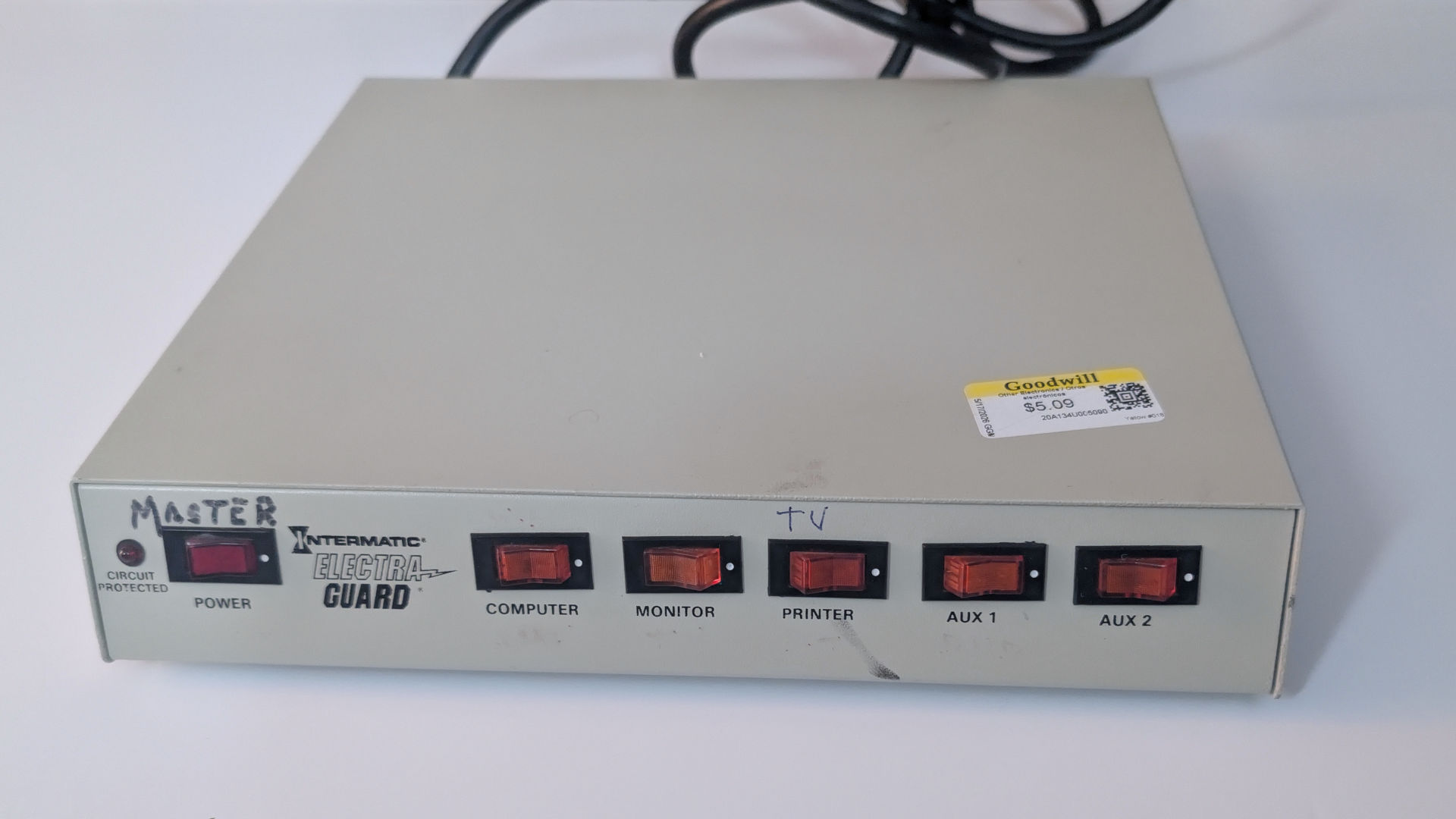
To those who have been using computers since the 80s, devices like this are certainly a blast from the past. As you can see, they're also readily available at Goodwill and other thrift stores for a reasonable price. Even when these devices were new, they ranged anywhere from 25 to 50 dollars, claimed to protect your hardware from power spikes and surges, much in the same way your traditional power strip works. These strips still do the job 30 years from now because they were simple. Turn the switch on to give something power. Turn it off to stop the power. This was a way to save on electricity because 8-bit and 16-bit computers, such as the Atari, Commodore/Amiga, and many game consoles like the ColecoVision and Intellivision, would have these transformer bricks that would perpetually leech power off of your power outlets.
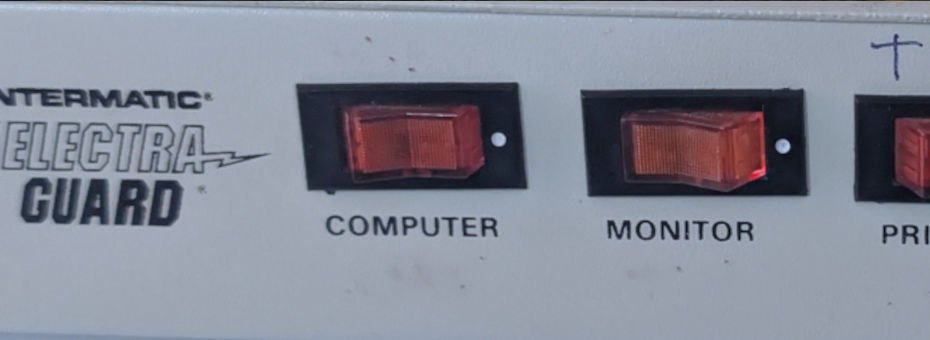
Its shape was unique because not only was it a power strip, but it was also a base to elevate your 12" to 21" tube monitor up from your office desk, along with your desktop computer that sat underneath this very power supply. Devices such as our Okidata 395 have the power switch on the back right. Or worse, our Zebra Z4M plus, where the power switch for that is in the back of the printer, resulting in me doing some interesting athletics just to turn it off. A box like this brings all of the power to the front, where it's easily engaged and disengaged. To some, the amber lights these switches would emit are indeed bright. Those lights would annoy certain desktop users, which would hurt their overall popularity. But that annoyance was also a reminder that power is flowing throughout your entire station. So after you turned off your monitor and shut down your PC, you would hit that master power switch before going to bed.
Cable Management.
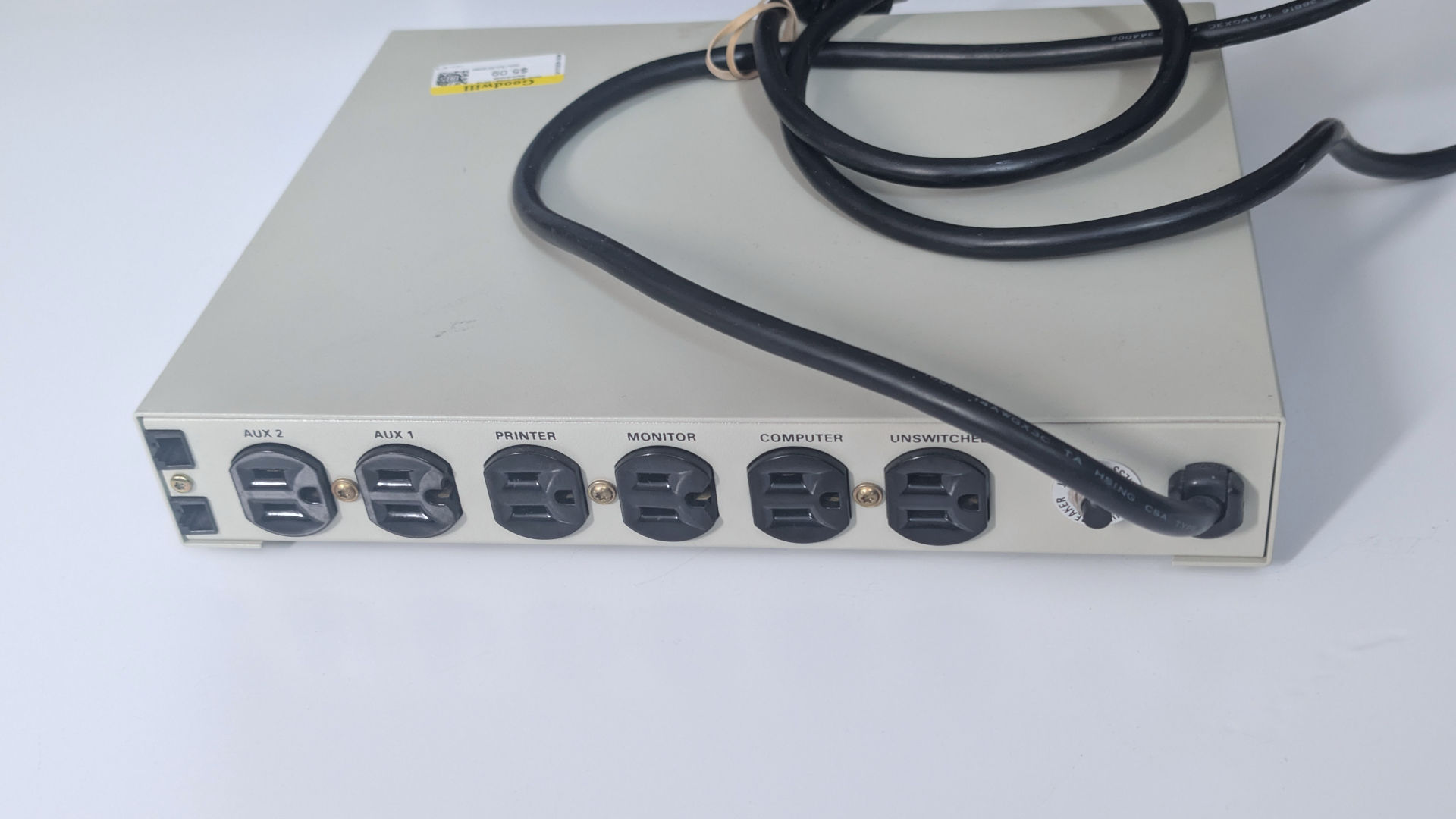
These boxes acted as an alternative for desktop cable management, where instead of having the power strip lying on the floor, getting disgusting because you cannot vacuum in that area with all of the power cables spewing out. Or, bolting it to the underside of your desk, making it super fun to add/remove plugs. It brought everything up to your desk. where ideally, all except one of your power cables were touching the floor after everything is said and done (if you had long cables that touched the floor, you would often just rubber-band or zip-tie them up so they would be tidy behind your desk).
No, there's no optical illusion; there are 6 plugs, but only 5 switches. These power strips would often give you an 'unswitched' socket for you to plug in something important, like a charging circuit for batteries or an office light, which may have its own power switch. Also on the back is an RJ-11 passthrough for your dial-up modem. In the analog POTS days of telephones, power would run through the RJ-11 line to power phones and to allow them to ring. Since telephone wires are hung on poles in America, just like general power. The potential of lightning entering your desktop via the modem would be equally as devastating.
Design.
WTF S, you're really gushing hard over something that you can easily get on amazon!
 Kind of? We guess?
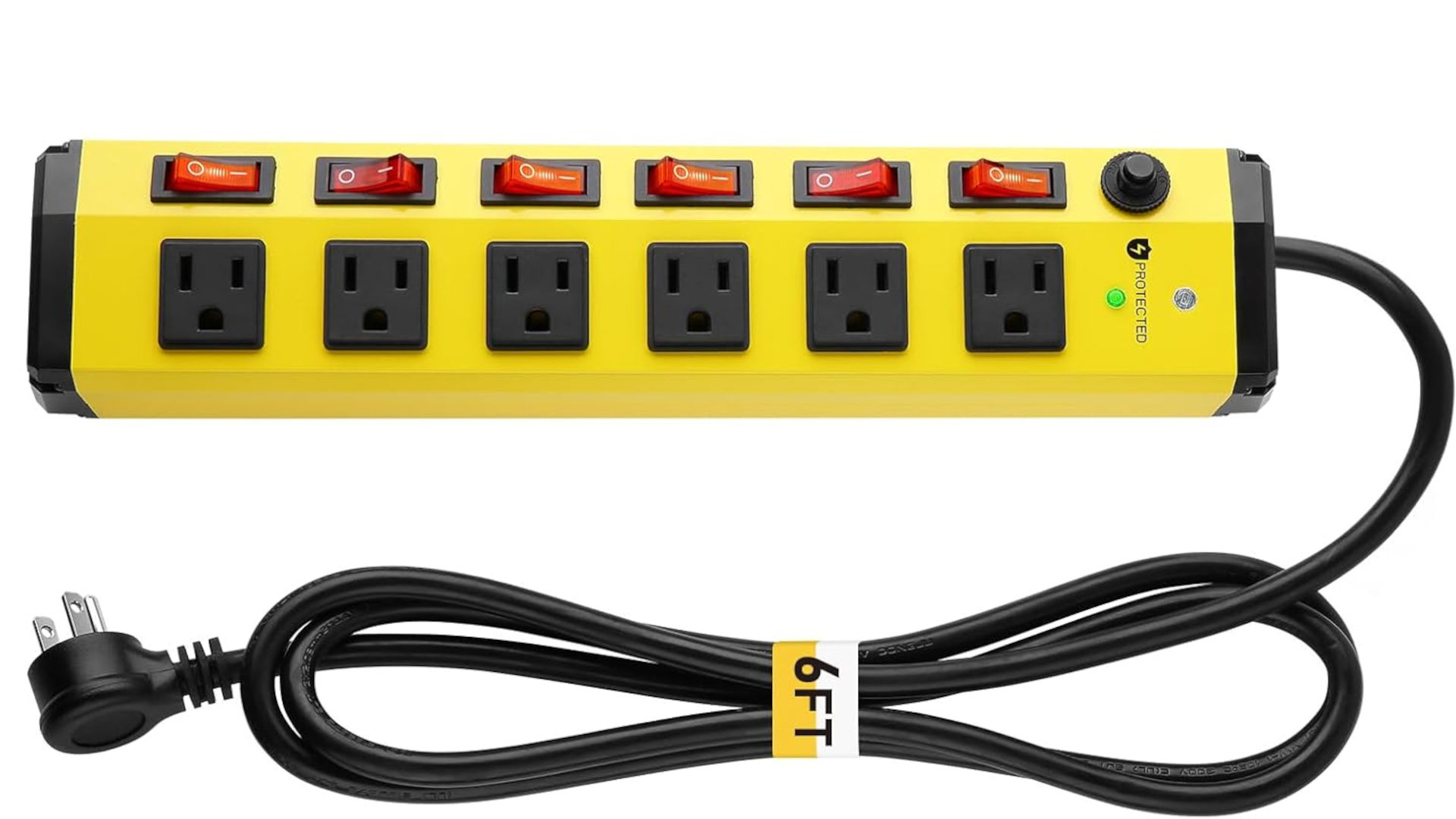
Yes, you can get power strips with independent switches. There are a lot of them! If we were to set up a testing bench for computer work. Something like that, pictured above, would be great! But in all practical terms, it's not great because this once again would probably hit the ground. OR! It would be bolted underneath a desk, which makes life a little difficult accessing everything. It's a very utilitarian approach to what we had in the 80's because yes. Everything is accessible. Not very elegant, as you have cords sticking up everywhere! But hey! Accomplishes the same job!
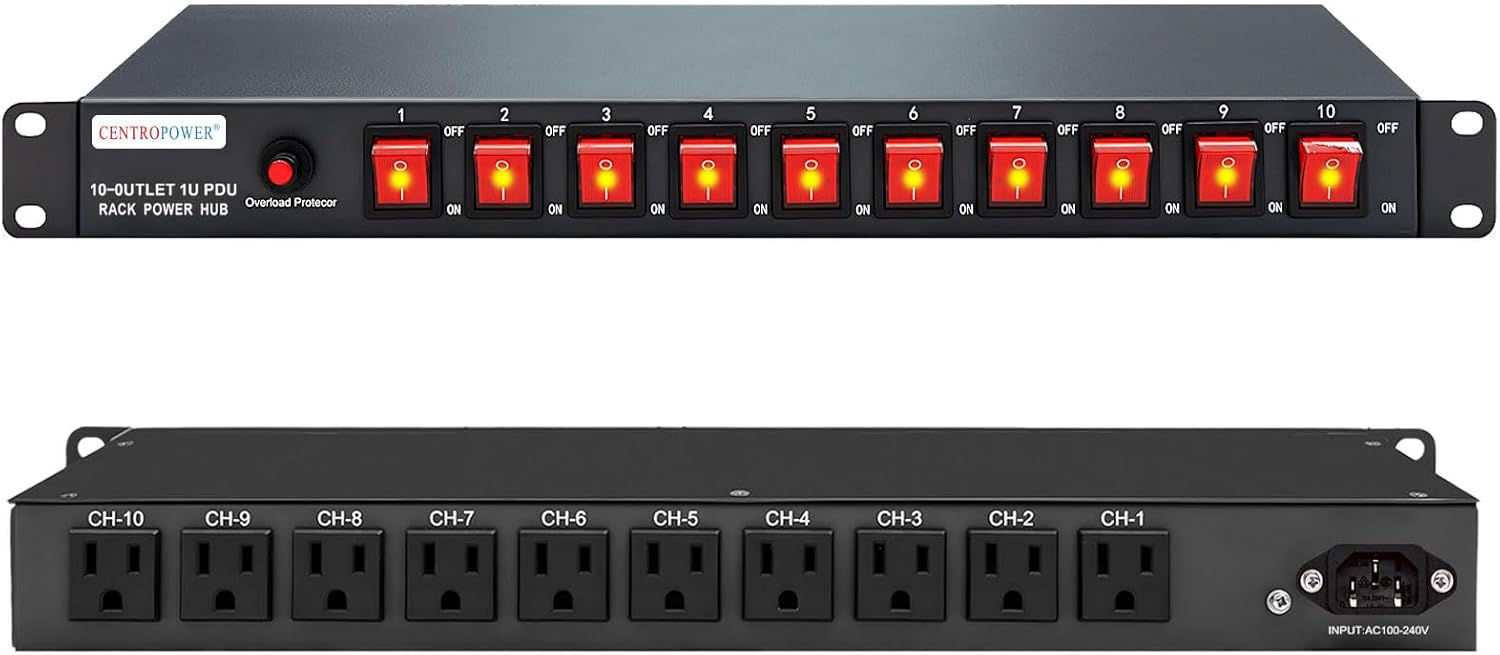
Closest thing we found in 2026 in power with killswitches for a network rack. We know that some of you in the IT industry might think this is a little counterintuitive to power killswitches on something that needs to be running 24/7. But it all depends on what you are putting on said rack. Having video/sound equipment where you can turn them on and off easily would be good for that type of environment.
And we suppose with some L-brackets, you could mount this underneath your desk for cable management and access purposes. This is legitimately the closest thing we have come to the 80's power switch setups of old. Which is good! We can still add a kill switch to our tech even in 2026.
The need in 2026 is real.
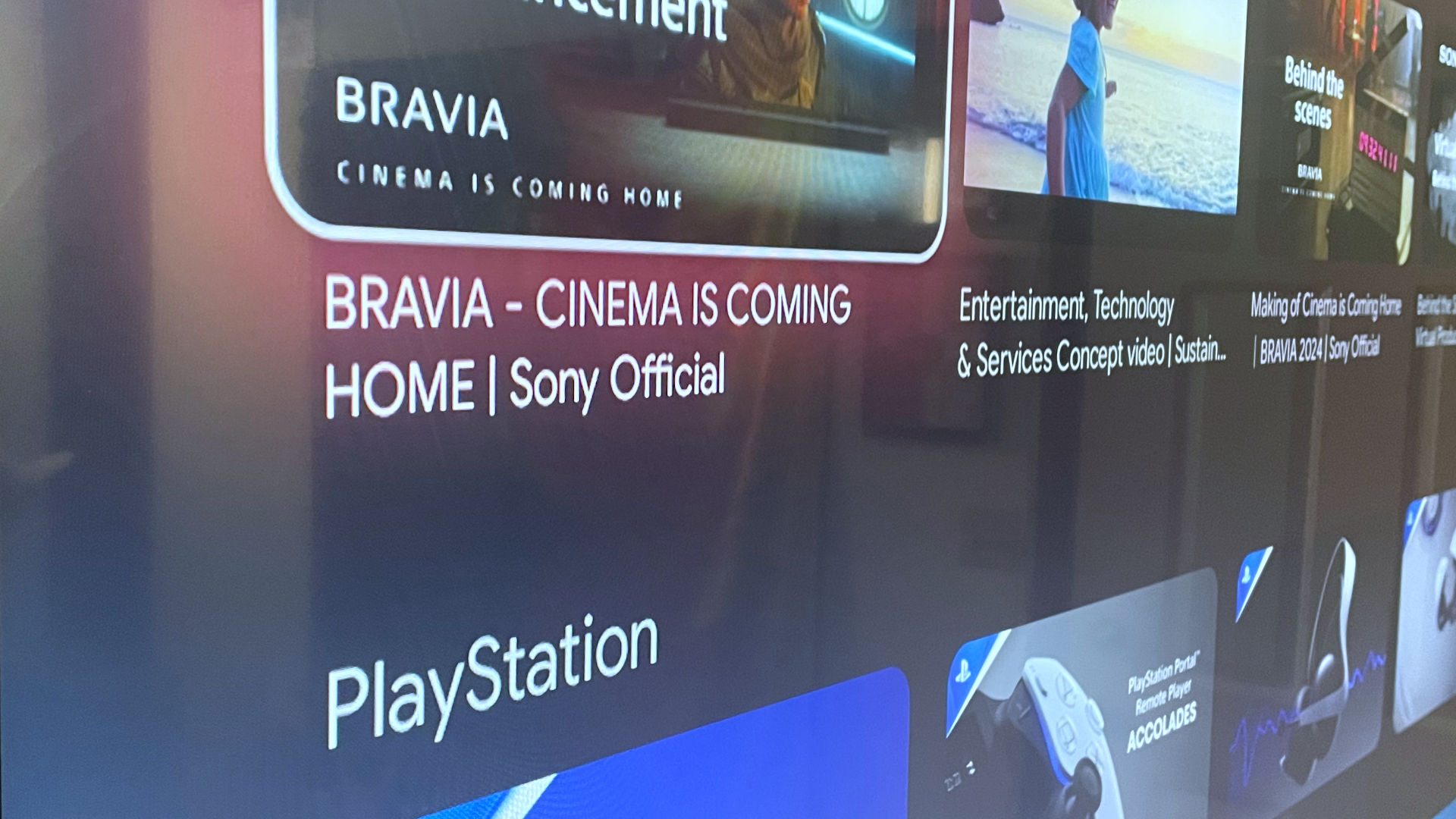 You guys have no idea how hard it is to take a picture of this thing WITHOUT it trying to shove a movie preview in your face.
Sidenote: We hate flat-panel TVs. Seriously, the worst purchase ever made.
There's nothing like waking up at 2 am to find the TV turned itself on due to an update.
Oh, sure, it's supposed to turn itself off when complete. But this time around, it left it on until the 2-hour timer would eventually turn it off. When I press the off button on the remote control of any device. We fucking mean it!
However, in today's era of 'smart' TVs, off is not really an option. Sony likes to update at random times. So in the middle of a lightning storm? Sure, why not? A corporation can be reckless with your purchase because you've already paid for it. What real incentive is there to do it right or wait for conditions to pass? Just flash, and if it bricks, you'll buy a new TV. Planned obsolescence.
Samsung's always-on approach is to use microphones against you, the consumer. Listen to people's conversations so when we start talking about moose porn in the house, we certainly do not want recommendations to get moose porn, now do we? The 'always online' culture of today's technology strips itself of an off button while at the same time giving a spyglass preview into every single home in America, while the TV happily does its firmware updates and data transfers back to the corporate office.
Even game consoles.
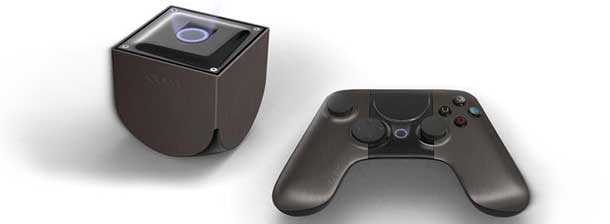
The Ouya (fuck yeah, I'm still making it relevant in 2026!) used to have a problem where it would overheat even when the console was turned off. Not entirely sure what sleep process was going on in these Android boxes that would cause the CPU to heat up while the fan and the rest of the system were off. But it did happen, and probably killed a lot of these consoles early on in their lives.
This was personally avoided because (guess what?) we installed a kill switch on the 12VDC brick this Ouya came with. Because of the console's age, it's now considered 'retro' we guess? So any action to keep these units that were meant to only run for a few years alive a little longer is perfectly fine by us.
Solution.
Yes, we put one of those Goodwill surge protector strips on, which has all of the switches front and center. This way, when I go to the airport, we don't have to worry about the TV turning on unattended in the middle of the night and setting fire to the rest of the house. The only downside is that we might have to wait for an update when we restore power. Which is fine, because at least I'm present as the update occurs.
Or better yet, we could stop the update. Because let's face it, the Android TV OS is less about security updates and more about justifying weak tit actors that were promised multiple Marvel/Disney contracts while singlehandedly destroying the very universe their childhoods existed in.
AI Stan Lee is going to destroy the Marvel universe, and now Jean Grey and Rocket Raccoon have to merge into one being to stop him? Pass..
This also works out really well for game consoles that I've pirated, er, freed from corporate oppression as well. Hit that power switch, and NO ONE is talking to that console!
Final thoughts.
This may seem like a stupid article for some of you. But the concept:
Put a switch on it. Even if you have a digital kill switch. Put a REAL kill switch on as well!
Seems to allude to big tech. The constant online environment is to churn a profit for their shareholders and not to really serve any real potential benefit to its end-users. In fact, most of big tech believes the average end user can't even answer a yes/no question. So they'll answer it for you. They'll waste your bandwidth installing spyware/ads/everything that you never really wanted installed into your tech in the first place.
We did an article a while back about replacing the Android front-end with something quieter. Sony attempted to cripple the inputs of our TV unless we went back to Android TV one time. (We did, and then after it was fixed switched it right the fuck back) Interestingly enough, my Nvidia Shield has been totally fine.
Update 06/06/2026
When we made this article, even WE thought we were being a little too tin-foil hat about this. But now, when big tech uses rapist reasoning that because you purchased something, it's OKAY to steal the bandwidth, potentially blacklist your IP due to the sites AI might visit, and become an A.I. Spiderbot (ClearNet). Your bandwidth, your CPU power is being sold off at $20/gig, and you get nothing and like it!
Take control, even if it's physical.
A TV should be a TV. Its only job should be to display pixels and display those pixels well. So when a SMART TV works against you in every possible way.. It's a technological enemy that deserves to be thrown into the trash, which we're getting very close to with this Sony Bravia TV. Seriously.. Fuck you, Sony.
If you do have to deal with malware-infected televisions, then it's probably best to set up a Pi-Hole DNS server (ClearNet) and send their ad requests into oblivion.
That's what server said.
+++END OF LINE